One connection. Everything you have granted them.
Your subscribers do not download files. They connect once to your Stacks, and from then on what they can reach is whatever you say they can reach, changed any time you like, from your dashboard.
They set it up once, in about a minute.
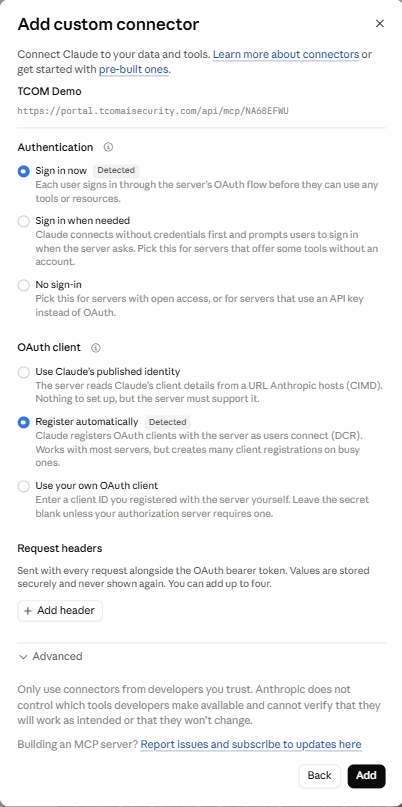
In Claude, they open Settings, then Connectors, then Add custom connector.
They paste your connector link and click Add. Under OAuth client, Claude offers to register automatically. That is the one to pick.
They click Connect and sign in with the email and password you issued them.
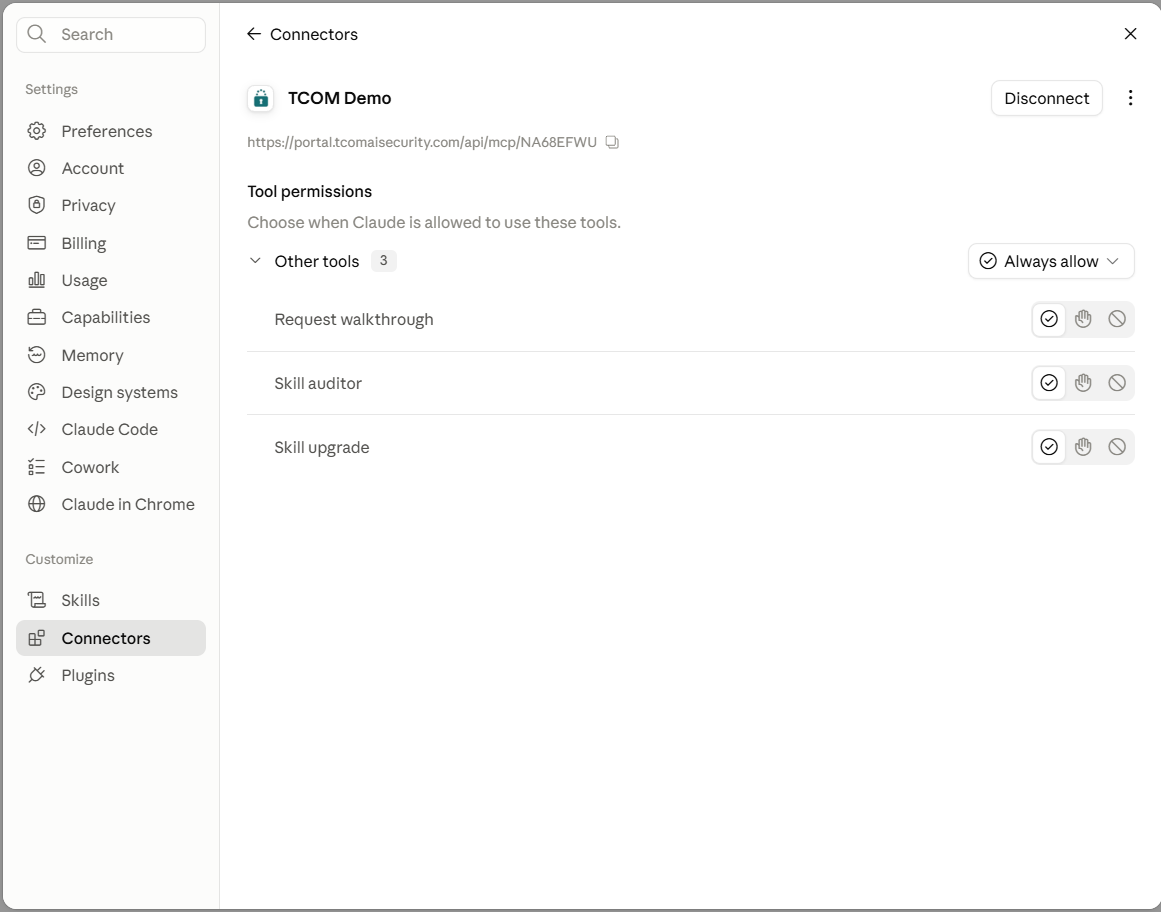
Every skill you have granted them shows up in their tool list. One connector, not one per skill.
Your connector link is yours alone, an eight-character token on the end of a portal address. You can hand the same link to every subscriber you have. What each person can actually reach is decided by what you granted them, not by the link.
Two kinds of protection, and the difference matters.
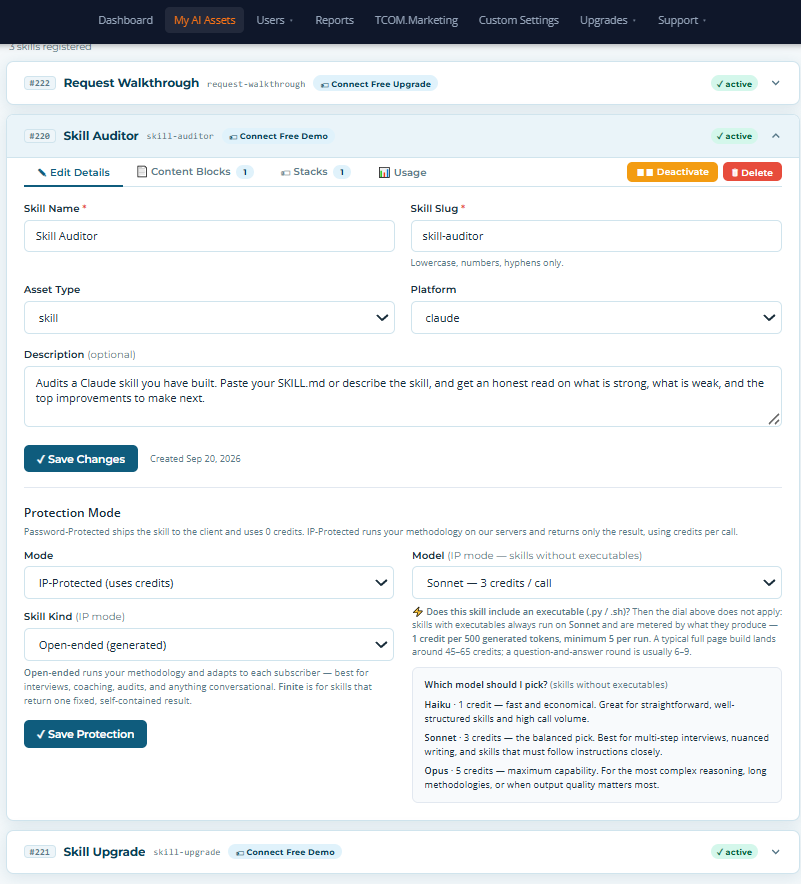
A Password-Protected skill is delivered to Claude when your subscriber calls it. It behaves like any file you have ever sent, except you control who can call it and you can stop them at any time. An IP-Protected skill is different. The methodology stays on our server, runs there, and only the finished result is sent back. Claude never receives the method.
Password protection controls who gets in. IP Protection controls what they can take, even from someone who is already in.
You change it once. Everyone has it.
When you publish an edit to a skill, the next time anyone runs it they get the new version. There is no file to resend and no old copy still circulating. When you grant someone a new Stack, it appears in their tool list on their next chat, with no new setup and no second login. They may need to start a new chat, or reconnect the connector once, before Claude shows the new name.
What a run costs you, and what it does not.
Password-Protected skills cost you nothing to run. The portal hands over the content you stored, and no generation happens on our side.
IP-Protected skills that answer in prose cost a flat number of credits per run, set by the model the skill uses. A faster model costs less per run, a stronger model costs more, and the length of the answer does not change the price. That means you can look at a skill and know what each run costs before anyone runs it.
Skills that run scripts are metered instead, at one credit per five hundred tokens of output, with a small fixed minimum per run that covers the setup work before the first token.
Your monthly credits are spent first, then any credit packs you have bought. Monthly credits reset on your billing day and do not roll over. Credit packs never expire.
If you run out, nothing breaks and nothing is charged. The skill politely tells your subscriber the creator needs to top up, and no run happens until you do.
When you cut someone off, it is not a request. It is a door.
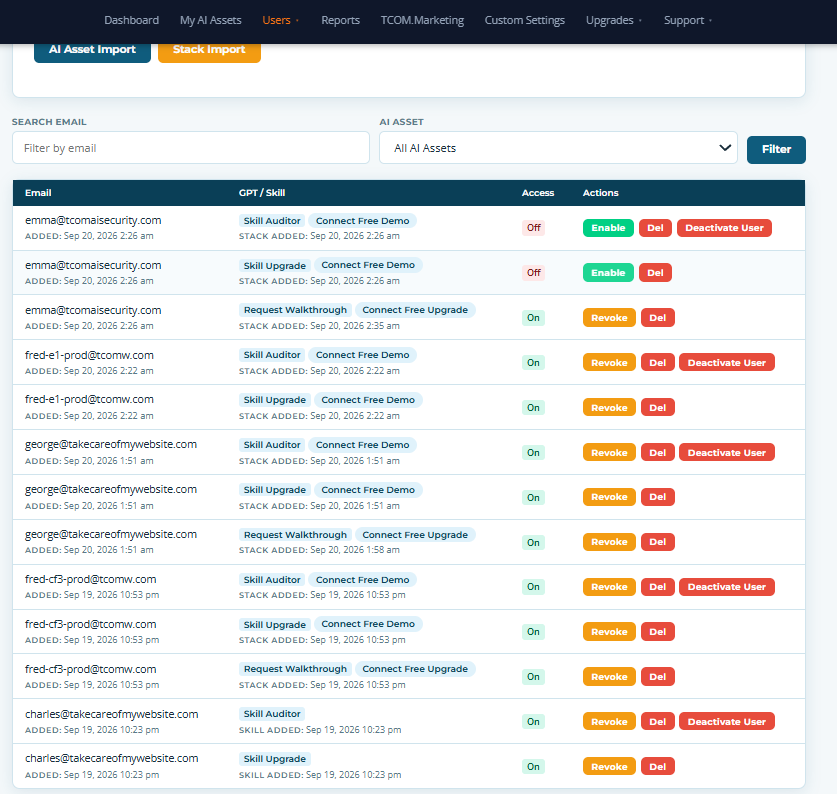
You can remove one Stack from one person, or block the person entirely. Removing a Stack leaves everything else they have working. Blocking the person closes all of it at once. Either way, the next call they make is refused.
The details people ask about.
No. Custom connectors work on Claude's free plan, with one connector slot. Paid plans allow more.
One. Every subscriber uses the same connector link, and what each of them sees is whatever you have granted them.
Their next run uses your new version. There is no cached old copy on our side.
No. The methodology never leaves our server, so there is nothing in their Claude to open, copy, or paste.
Yes. Custom GPTs and Skills in Perplexity and other connected apps run through the same dashboard with the same controls.
See it work with two skills of mine.
Connect free, run an audit on a skill you have built, and watch a second skill appear on your connection while you are still in the same chat.